
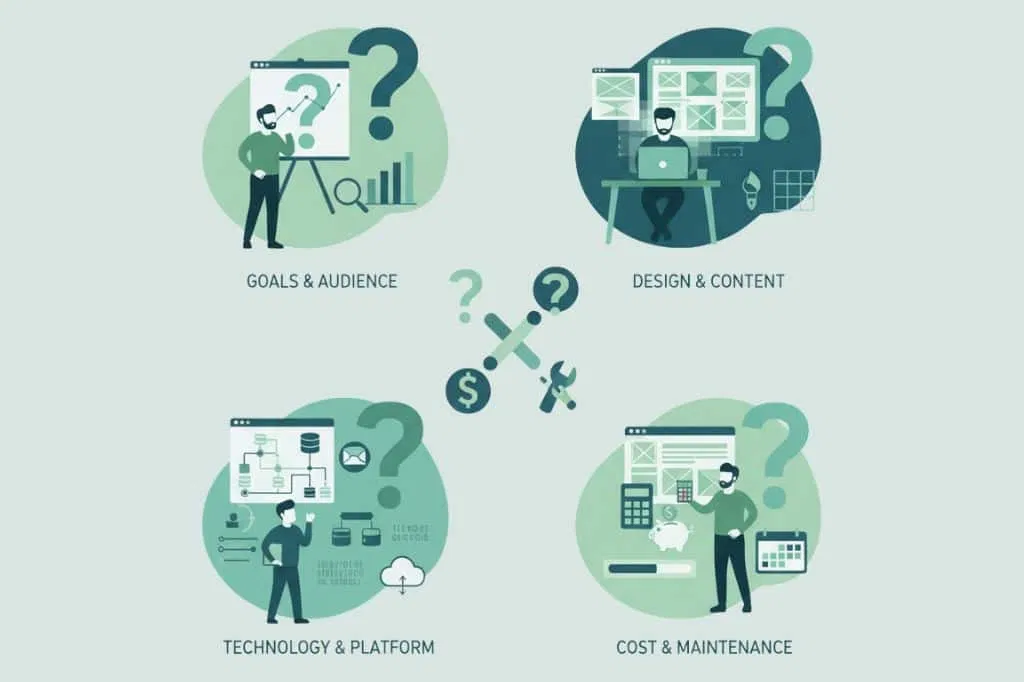
Building your own website is exciting — but it can also become overwhelming if you start without a clear plan. A website is more than an online brochure; it’s a sales tool, a trust-builder, and a 24/7 representation of your brand. Whether you're a startup, a growing business, or a nonprofit, the success of your website depends on the decisions you make before you begin.
Below are the four foundational questions you should ask before building your website — the same questions that separate high-performing websites from those that fail to attract or convert visitors.
1. What Is the Core Purpose of Your Website?
Before choosing a platform or design, determine why your website needs to exist.
Ask yourself:
- Is your primary goal to generate leads, phone calls, or bookings?
- Do you want to educate visitors, promote your authority, or showcase success stories?
- Are you selling products or services and need e-commerce functionality?
- Will you need a blog, membership area, or client portal?
When your purpose is crystal clear, you avoid distractions and build a website that supports your business goals. A well-defined purpose ensures the navigation, layout, and messaging all work together to drive results.
2. Who Is Your Target Audience — and What Are They Looking For?
Your website should be created for your ideal customers, not for you.
Consider:
- Who will visit your website?
- What problems are they trying to solve?
- What questions do they ask before contacting a business like yours?
- What information helps them trust you? (reviews, case studies, credentials, clear pricing)
Understanding your audience informs everything — from the words on your homepage to the structure of your services pages. When you build for your ideal customer, your website becomes a more powerful conversion tool.
3. What Features, Functionalities, and Budget Do You Need?
Before building your site, outline the features that are must-haves versus nice-to-haves.
Typical essentials include:
- Home, About, Services, and Contact pages
- Lead forms and clickable calls to action
- A blog or resource section
- Mobile responsiveness
- SEO-ready structure
- Security and privacy compliance (SSL, cookies, data protection)
More advanced needs may include:
- E-commerce
- Landing pages and funnels
- Membership areas
- Event calendars
- Automated workflows
- Custom integrations (CRM, email marketing, booking systems)
At the same time, establish a realistic budget. Websites range widely depending on complexity, functionality, and content needs. Creating a clear list of features helps you stay within budget and prevents overspending on unnecessary extras.
4. Do You Have a Solid Content and Branding Plan?
Many people underestimate how much content a website requires — and how important branding consistency is to user trust.
Plan out:
Your Brand Identity
- Voice and tone
- Logo usage
- Colors and typography
- Visual style (photos, icons, illustrations)
Your Content Needs
- Who is writing your website copy?
- Do you have existing content worth reusing?
- Do you need new photos or will you use stock images?
Your Site Structure
- What pages do you need now?
- What pages might you need later?
- How will your navigation be organized?
A strong content and brand foundation ensures your website feels consistent, credible, and aligned with your business goals — not pieced together.
Frequently Asked Questions (FAQs)
1. Do I need a professional web developer, or can I build a website myself?
DIY website builders work for simple needs, but if you want strong SEO performance, fast loading speed, or custom features, working with a professional developer is usually the better option. A professional ensures your site is optimized, secure, scalable, and aligned with your business goals.
2. How long does it take to build a website from scratch?
A typical small business website usually takes 3–6 weeks, depending on how quickly content is supplied. More complex sites — such as those with e-commerce, membership features, or custom integrations — can take 8–12 weeks or longer.
3. What is the biggest mistake people make when building their own website?
Most people jump straight into design before identifying goals, target audience, or content structure. This often leads to a site that looks good but performs poorly. Strategy should always come before design.
4. Should content or design come first when building a website?
Content should come first. Your messaging determines layout, calls to action, and user flow. Design enhances and supports the content — not the other way around.
5. How much should I budget for a new website?
Budgets vary depending on features and complexity. A simple website may range from $1,500–$5,000, while custom, high-performance sites can be $10,000+. What matters most is aligning your budget with your goals and long-term growth plans.
Conclusion: Build with Intention, Not Guesswork
Building your website is an investment — one that should support your business, not add frustration or wasted spend. When you take the time to answer these four foundational questions, you’re not just building a site… you’re creating an asset that works for your business long-term.
If you want expert guidance, professional strategy, or a done-for-you process that takes the guesswork out of website creation. Contact Strategic Websites today and let’s turn your vision into a high-performing online presence.