
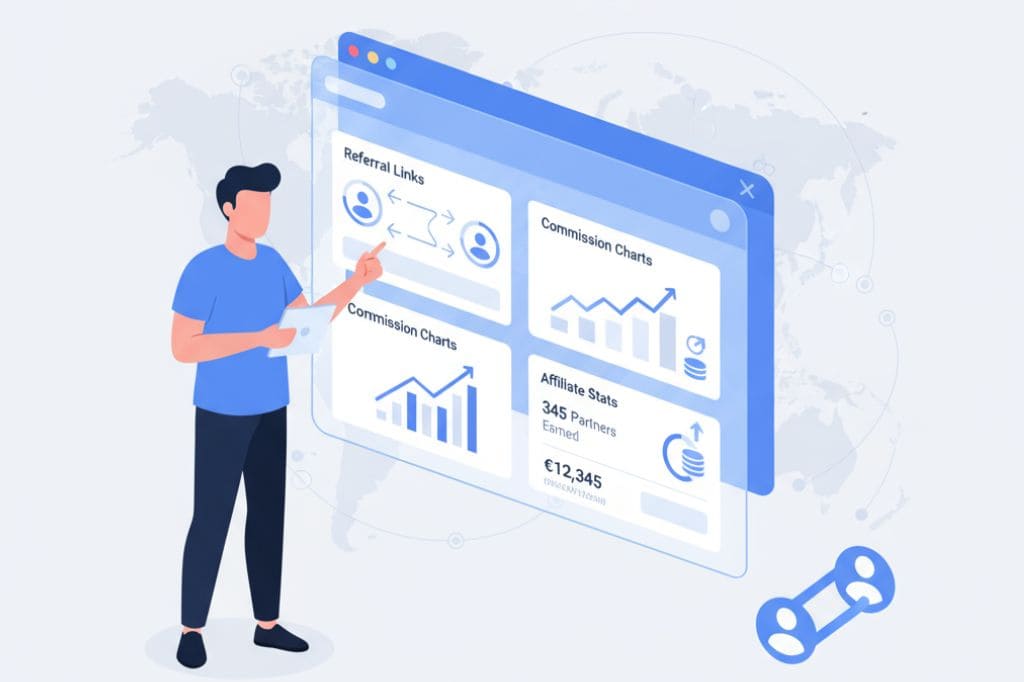
Want a low-risk way to grow sales without front-loading ad spend? With a WordPress affiliate program, you empower partners to recommend your products and earn commissions only when they drive results. You gain reach, credibility, and predictable acquisition costs.
In this guide, you will see how affiliate marketing works, whether it fits your margins, and the exact steps to launch and track it in WordPress. If you are setting up affiliate program processes for the first time, you will learn what to do, what to avoid, and how to measure success with confidence.
What Is an Affiliate Program and Why Should You Care
An affiliate program is a performance-based partnership where you pay a commission when a tracked action occurs, such as a sale or qualified lead. You define commissions, share unique links and assets, and affiliates promote your offer to audiences you might not reach on your own.
Simple math example: with a 10% commission on a $120 product, you pay $12 only when a purchase is tracked via the affiliate link or coupon. That pay-for-outcome model keeps cost per acquisition aligned to revenue while you scale efficiently.
- Key pieces: tracking and attribution, payouts, terms, creative assets, and recruiting.
- Who participates: bloggers, creators, communities, publishers, and loyal customers who already trust you.
How Do Affiliate Programs Work in WordPress
On WordPress, you install an affiliate plugin that tracks referrals, attributes sales, and streamlines payouts. Popular choices include AffiliateWP, Easy Affiliate, and SliceWP, which integrate with WooCommerce, Easy Digital Downloads, and other carts so you can map orders to commissions automatically.
Typical flow: an affiliate shares a unique link; a 30-day cookie tracks the click; the shopper checks out; the system logs a referral and applies your set commission. If your average order value is $80 and you set 15%, you pay $12 per order, giving partners fast and transparent earnings.
- Tip: use coupon-based attribution for podcasts and email where links are less convenient, and test a 30–60 day cookie window.
How Does an Affiliate Program Strengthen Credibility and Trust
You gain third-party validation when independent experts choose to cover your product. Reviews, tutorials, and comparisons show how your solution solves real problems for real users, which builds social proof.
Exposure example: if five respected partners each publish a review that earns 500 visits per month, you receive ~2,500 targeted visits monthly without buying ads. Even at a modest 2% conversion rate, that is 50 incremental orders compounding over time.
- Best practice: provide honest talking points, require clear FTC disclosures, and share real customer outcomes to reinforce trust.
How Does an Affiliate Program Affect SEO and Performance
You should focus on compliant linking and high-quality, search-focused content. Use rel=”nofollow” or rel=”sponsored” for affiliate links so search engines understand the relationship while your performance tracking remains intact.
Performance example: if an affiliate post draws 1,000 organic visits and converts at 3%, you can expect ~30 sales. With a $10 average commission, that single post may generate $300 in commissions and meaningful incremental revenue for you.
- Tip: share keyword themes, on-page checklists, and refreshed creatives quarterly so partners can rank and convert faster.
What ROI Can You Expect From Affiliate Marketing
Affiliate marketing aligns spend with outcomes; you pay when value is created. When margins are healthy, your upside can be significant because variable costs scale with revenue rather than impressions or clicks.
Unit economics example: with a 60% gross margin on a $100 product and a 15% commission, you keep $45 per sale after commission ($60 margin minus $15 commission). If a paid ad conversion normally costs $35, your affiliate channel delivers $10 more contribution per order.
- Guardrail: set commissions that cover returns, discounts, and seasonal promos, and revisit quarterly.
Step-By-Step: How Will You Set Up Your WordPress Affiliate Program
Step 1: Choose the Right Plugin or Platform
You need reliable tracking, simple setup, and accurate reporting. Compare per-product rates, recurring commissions, coupon attribution, fraud controls, and automated payouts so your stack supports scale without manual work.
Step 2: Install and Connect Your Cart
Install the plugin, connect WooCommerce or your checkout, and choose which order statuses trigger commissions. Place a $1 test order through an affiliate link to confirm cookies, attribution, and webhook events.
Step 3: Define Your Commission Structure
Set a default rate (e.g., 10%) plus product-level or category-level overrides for hero items. Add tiers—such as 12% after 20 sales in a month—to reward momentum without overcommitting from day one.
Step 4: Outline Terms, Compliance, and Disclosures
Write clear terms covering cookie duration, payout timing, allowed traffic, coupon rules, and trademark bidding. Require FTC disclosures, ban misleading claims, and reserve the right to reverse fraudulent referrals.
Step 5: Build Your Affiliate Area and Assets
Create a branded affiliate area with links, banners, copy snippets, and UTM templates. A ready-made starter kit can cut onboarding time by up to 50% for busy partners and increase first-30-day activation rates.
Step 6: Configure Payouts and Taxes
Choose how you pay—PayPal Payouts, ACH, or store credit—set a $50 minimum and a hold period to cover refunds. Consider recurring commissions for subscriptions to encourage long-term advocacy.
Step 7: Recruit, Activate, and Measure
Invite your email list, customers, and relevant creators. Track activation rate (approved affiliates with one sale), time to first sale, and earnings per click. Improve results with better assets, faster support, and targeted outreach.
Mistakes and Pitfalls You Should Avoid
- Inconsistent tracking: failing to test links and coupons costs revenue; run a monthly audit and test multiple browsers.
- Thin creatives: if partners lack assets, they may not promote; ship updated banners, copy, and product angles quarterly.
- One-size commissions: offer flexible rates for high-intent content and flagship products, and use private terms for top partners.
- Slow payouts: late payment erodes trust; a predictable 30-day cadence with self-serve statements keeps programs healthy.
Frequently Asked Questions
What is the difference between an affiliate and a referral?
An affiliate joins your program under set terms; a referral is any recommendation that drives a lead or sale, whether tracked or informal.
How fast can you make money with affiliate marketing?
With active onboarding and ready assets, you often see first sales in 2–4 weeks, and momentum builds as content ranks and emails repeat.
What commission rate should you start with?
Start at 10–20% for digital and 5–15% for physical goods, then adjust based on margin, average order value, and partner content quality.
Do you need an affiliate network?
You can run in-house for control and lower fees; add a network later for reach, compliance tools, and access to pre-vetted publishers.
How do you get paid out as an affiliate?
You receive PayPal or ACH after meeting your threshold and hold period; payment timing and reversals follow your program terms.
Key Takeaways
- You pay for results, not clicks, keeping acquisition efficient and predictable.
- You can set fair commissions that match margin, product tiers, and growth goals.
- You need accurate tracking, clear terms, and on-time, transparent payouts.
- You will grow faster by enabling partners with assets, guidance, and feedback.
- Start small, learn quickly, and iterate based on data, not guesses.
To put this into practice, launch your first version, measure what matters, and refine monthly.
Ready to grow your sales with a high-impact, low-risk affiliate program?
Get expert guidance and hands-on support from Strategic Websites to launch your WordPress affiliate program smoothly and start driving results faster.
Contact us today and empower your partners to promote your brand while you watch your revenue climb—paying only for real, trackable success.